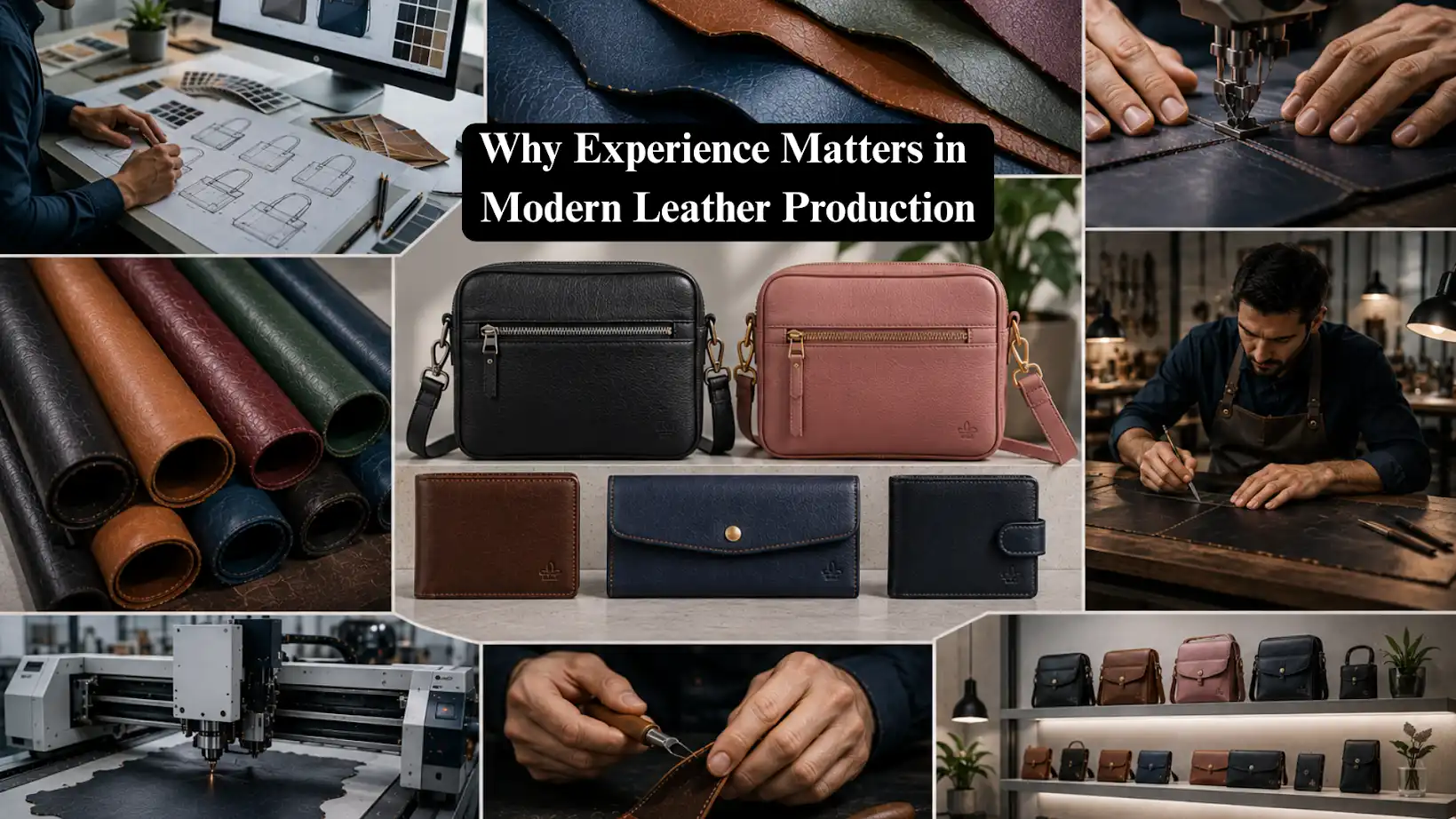
Modern leather production has evolved significantly over the past decade. Today leather manufacturers can achieve higher levels of efficiency and precision than ever before. These advancements have reshaped how leather goods are produced, enabling faster turnaround times and more consistent output.
However, even with these technological improvements, one factor continues to play a defining role in determining product quality and experience. Unlike synthetic materials, leather is a natural material that requires careful handling and informed decision-making at every stage of production. This is where experience becomes essential.
This article explores why experience continues to matter and how it shapes outcomes in today’s evolving leather industry.
Why Experience Still Matters in Modern Industry
It may seem that machines can handle most aspects of production. However, experienced professionals bring a level of understanding that machines simply cannot replicate. They understand how leather behaves under different conditions and can make adjustments in real time adjustments to maintain quality.
Experience contributes in several important ways:
- Interpreting natural variations in leather
- Making informed decisions during production
- Ensuring consistency across batches
- Preventing defects before they escalate
Experience in leather production acts as a guiding force, ensuring that technology is used effectively rather than mechanically. It bridges the gap between raw material variability and the consistency expected in finished products.
Modern Leather Production: Where Experience Makes the Difference
The strength of modern leather production lies in combining advanced technology with the practical insight gained through years of experience.
-
Raw Material Selection and Grading
The process of raw material selection and grading is one of the most critical steps in leather manufacturing. Every hide is different, and understanding these differences requires trained observation. This stage has a direct impact on the final product. Selecting the wrong material can lead to inconsistencies in durability and appearance. Skilled experts can identify even subtle imperfections and decide whether a piece is suitable for a specific product. Their judgment ensures optimal material usage, reduces waste, and contributes to consistent product quality.
-
Quality Control and Defect Detection
Maintaining high standards in leather goods requires more than automated inspection systems. Quality control and defect detection rely heavily on human expertise. While machines can detect visible inconsistencies, they may not always identify deeper issues like weak grain structures or finishing irregularities.Experienced inspectors use both visual and tactile methods to assess quality. They can recognise early signs of defects that might affect performance over time.
-
Experience vs Automation: Why Machines Aren’t Enough
Automation has become a key part of the modern leather manufacturing process, offering precision and efficiency in repetitive tasks. But leather does not always behave predictably and machines are limited to pre-set instructions.
Machines can cut, stitch, and process materials with accuracy, but they cannot interpret variations or adapt to unexpected changes. Experienced operators play a crucial role in guiding machinery, making adjustments, and ensuring that production runs smoothly. This balance between technology and expertise is what allows manufacturers to maintain both efficiency and quality.
Why Automation Has Not Replaced Experience
Human expertise remains irreplaceable in leather production despite advancements in automation. The section why automation has not replaced experience reflects the reality that leather’s natural variability requires flexible decision-making.
Experienced professionals understand how factors like moisture and temperature as well as material condition can influence production outcomes. They can adapt processes accordingly, ensuring consistency even when variables change.
Machines, on the other hand, lack this adaptability. This is why experience continues to play a central role in maintaining production stability and product reliability.
Impact of Experience on Leather Quality
The impact of experience on leather quality can be seen in every finished product. Experienced manufacturers understand how each stage of production contributes to overall performance. From selecting the right material to applying the correct finishing techniques, their expertise ensures consistent results.
Experience contributes to:
- Improved durability and wear resistance
- Better finishing and surface consistency
- Reduced material waste
- Reliable product performance over time
This combination of knowledge and practical skill acts as a quality safeguard, ensuring that modern leather production meets both industry standards and customer expectations.
Conclusion
Modern leather production continues to evolve with the integration of advanced technologies and automated systems. However, experience remains a fundamental element that cannot be replaced.
From raw material selection to final assembly, experience ensures that every stage of production meets high standards of quality and consistency. Ultimately, experience in leather production is not just relevant; it is a critical advantage that supports durability, reliability, and long-term value in a competitive global market.
FAQs
-
Why is experience important in modern leather production?
Experience helps manage material variability, improve quality control, and ensure consistent output.
-
Can automation replace skilled craftsmanship in leather manufacturing?
No, automation supports efficiency but cannot replicate human judgment and adaptability.
-
How does experience affect leather quality?
It improves material selection, finishing accuracy, and overall product durability.
-
What role does craftsmanship play in leather goods?
Craftsmanship ensures precision, structural integrity, and high-quality finishing.