Consistency, speed, and reliability are no longer optional, but they are essential for sustained business success. For companies operating in the leather industry, these factors are closely linked to how efficiently their leather supply chain is managed. From sourcing raw materials to delivering finished products, every stage must operate smoothly to meet quality expectations and delivery commitments.
This is where effective leather supply chain management becomes a strategic advantage. A well-organised and dependable supply chain not only improves operational efficiency but also supports long-term growth.
This article explores how leather supply chains contribute to business success and outlines the key strategies needed to build a reliable system.
Why a Reliable Leather Supply Chain Matters for Business Growth
A reliable leather supply chain provides the structure required for consistent production, quality control, and scalable growth.
-
Consistent Material Flow and Production Stability
One of the most important advantages of a strong leather supply chain is the ability to maintain a steady and predictable flow of raw materials. Leather, as a natural material, can vary in quality and availability depending on sourcing and processing conditions. When material availability is consistent, businesses can plan production schedules with greater confidence. This reduces delays, minimises uncertainty, and supports smoother operations. Over time, this stability enhances overall productivity and creates a dependable manufacturing environment, which is essential for sustained business growth.
-
Improved Quality and Standardisation
A well-managed supply chain plays a direct role in maintaining consistent product quality. Reliable leather suppliers follow established standards for grading and processing. This helps manufacturers achieve uniform results across production batches. This level of consistency reduces variation and ensures that products meet both functional and aesthetic expectations. It also simplifies quality control by creating a predictable production environment. Consistency in quality is often what distinguishes successful brands in competitive markets.
-
Reduced Risks and Greater Supply Chain Stability
Disruptions in the supply chain can have a significant impact on production timelines and customer commitments. Strong leather supply chain management helps reduce these risks by establishing stable supplier relationships and incorporating contingency planning into operations. Businesses that invest in reliable sourcing networks are better equipped to handle fluctuations in demand or material availability. This proactive approach minimises uncertainty and ensures continuity even in changing conditions.
-
Scalability and Business Expansion
As businesses grow, their production requirements naturally increase. A reliable supply chain provides the flexibility needed to scale operations without compromising quality. Dependable suppliers can adjust to higher volumes and support expanding production needs. This allows businesses to take on larger orders and enter new markets, and also respond to increased demand with confidence. The connection between the leather supply chain and business growth becomes particularly evident here. With the right system in place, growth becomes both manageable and sustainable.
Stages of the Leather Supply Chain
Understanding each stage of the leather supply chain helps businesses identify opportunities for improvement and maintain consistency across operations.
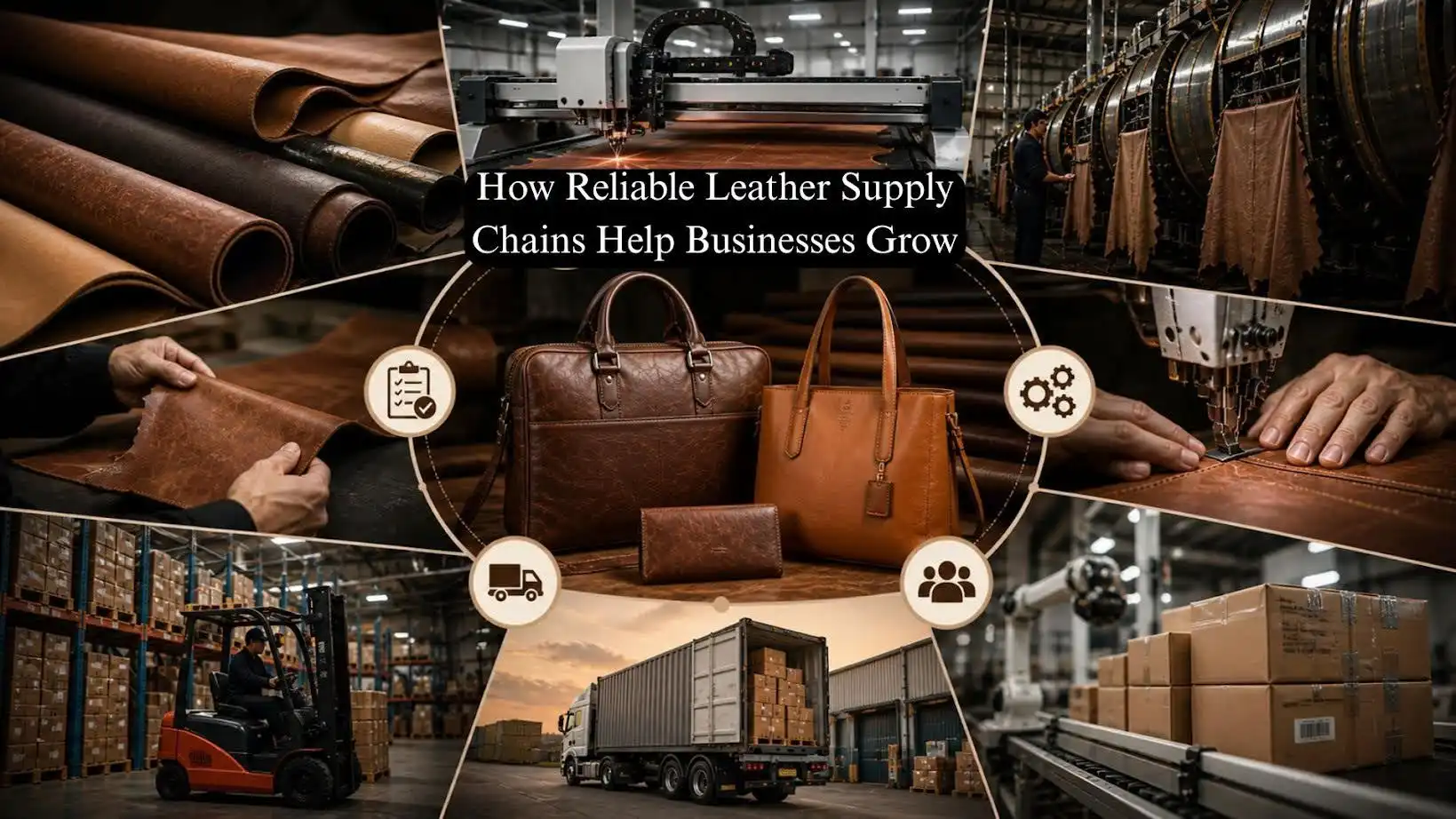
The typical stages of the leather supply chain include:
- Raw material sourcing and grading
- Tanning and processing
- Manufacturing and assembly
- Quality inspection and packaging
- Distribution and delivery
Each stage plays a critical role in the overall performance of the supply chain. Any weakness in one stage can affect the final outcome. By maintaining control and visibility across all stages, businesses can ensure smoother operations and more reliable results.
Benefits of Leather Supply Chain Management for Businesses
Effective supply chain management provides measurable benefits that support both operational efficiency and long-term growth.
Key benefits of leather supply chain management for businesses include:
- Improved production efficiency
- Reduced operational risks
- Enhanced product quality
- Better resource utilisation
- Increased scalability and flexibility
These advantages demonstrate how a well-managed supply chain contributes directly to business success and competitive positioning.
Conclusion
A reliable leather supply chain is not just an operational necessity but a strategic asset that drives business growth. From ensuring consistent access to raw materials to improving efficiency and reducing risks, a strong supply chain influences every stage of production. Businesses that invest in building stable and efficient supply chain systems are better positioned to meet customer expectations and scale operations effectively. Ultimately, the strength of the leather supply chain determines how effectively a business can grow and maintain its position in the global market.
FAQs
-
What is a leather supply chain?
It includes all stages from sourcing raw materials to delivering finished leather products.
-
Why is leather supply chain management important?
It ensures efficiency, consistency, and timely delivery across production processes.
-
How does a reliable supply chain support business growth?
It improves scalability, reduces risks, and enhances customer satisfaction.
-
What are the key stages of a leather supply chain?
Sourcing, processing, manufacturing, quality control, and distribution.